| 1903 | Born on April 3 at Gokasho, Kanzaki-Gun, Shiga Prefecture
as the third son of Shohichi Kitamura, and his wife, Mitsu. Having been sickly from birth, Tomizo had to struggle against illness until 21-22 years old. |
| 1926 | 23 years old. Started to learn painting under Kunitaro
Teramatsu in Kyoto. |
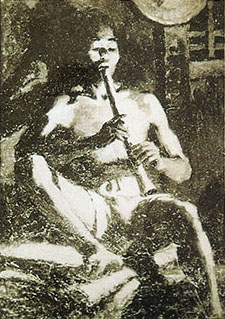
| 1929 | 26 years old. Sent in "The Tune of a Flute" to the Teiten
Exhibition and was accepted for the first time. Became pupil of Sotaro Yasui and moved to Tokyo with his master. Settled in Shimoochiai, Tokyo and concentrated on painting. Sent in "A Big Pine Tree" to the Nika Exhibition. |
| 1933 | 30 years old. Married Hisa Achiwa. "Rice Field in Early Summer" was accepted at the Nika Exhibition. |
| 1936 | Issuikai was founded by Sotaro Yasui, and began to send in his works to the exhibition of this group. |
| 1940 | Stayed in Manchuria from spring to autumn and worked back in Japan in winter. During his stay in China, travelled to Lu-ta, Hsin-ching and Chi-lin. In Lu-ta, Mr. Yamanaka supported him. In Hsin-ching, Mr. Mukobo, the then director of the Manchurian Railways, supported him. In Chi-lin, through the kindness of the priest of Myoshinji-temple, was provided with a studio. |
| 1943 | The war spread in China and Tomizo decided to returned to Japan by a ferry, "Kokuryu-maru". |
| 1945 | Evacuated with his family from Tokyo to Shiga prefecture. Lived in Goide and then in Miyasho. |
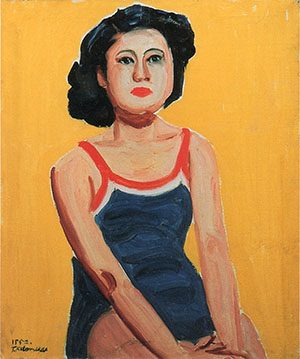
| 1952 | Sent in "Portrait of His First Daughter" to the Issuikai
Exhibition and was accepted. |
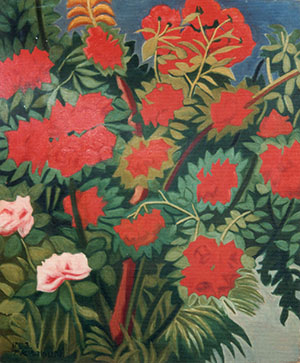
| 1953 | "The Rose in the Garden", was accepted at the Issuikai
Exhibition. His disease (Tuberculosis of the lungs) became worse and was hospitalized. |
| 1956 | Died on January 23 in sanitarium in Yokaichi-city, Shiga Prefecture. |